Sunday, December 13, 2009
Vik Muniz, Part II
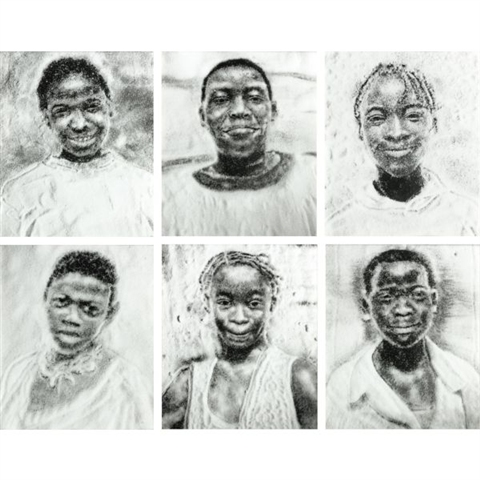
I think that art can be both humorous and meaningful. To me, it seems strange that we question a work's validity as art if we also see that it's amusing. We do not, for example, ask if art can be beautiful and meaningful, or somber and meaningful. It is only towards humor that we hold this reservation, and I'm not really sure why. Perhaps we fear that laughter is cheap. However, I think that in this we confuse frivolity, something meant strictly to please, with a work that, although amusing, we still feel is art. Or we believe that a serious truth can only be conveyed through an equally grave vessel. However, in Muniz's work, I think we often see the power of humor in illustrating a rather grim reality. For example, his "Sugar Children" demonstrate this quality. His title is true in that he has rendered these images, literally, with sugar, but also because they depict the children of a sugar plantation. In this way, the series is witty. Beyond this though, we might find a darker significance. The bright innocence we see in these children is ephemeral; their trusting happiness cannot last. These images are similarly fleeting; the medium he uses to render them is as easily destroyed as their joie de vivre. As Muniz said of his subjects, "In contrast to the fresh, sweet demeanor of the children, their parents seemed weary and bitter, the inevitable result of an unfair exchange: long, backbreaking hours of labor at the sugar-cane plantation for a meager salary." He realized that the "mysterious, poisonous potion which would transform those bright-eyed island children was sugar." Thus, I think that it is in the interpretation of a comical work, as in any other form of art, that we might find meaning.

Subscribe to:
Post Comments (Atom)


Choosing "Sugar Children" to help illustrate your point that humor can lay a foundation for a "darker significance" was an excellent decision. Great post.
ReplyDelete